ISRC, ISWC, IPI and UPC: which code does what
Every released track carries four codes. The ISRC names the recording, the ISWC names the song, the IPI names the writer and the UPC names the release. Mix them up and royalties stall.

A released track carries four codes. Each one points at a different thing, and a different organisation hands it out.
- ISRC names one recording.
- ISWC names the song underneath it.
- IPI names a person or company with a claim on the song.
- UPC (or EAN) names the release you sell or stream.
They are not interchangeable. A missing or reused code is one of the most common reasons royalties sit unpaid.
The four codes at a glance
| Code | Names | Example | Issued by |
|---|---|---|---|
| ISRC | A recording | BE-A12-26-00001 | Distributor or ISRC agency |
| ISWC | A song | T-345.246.800-1 | Collecting society |
| IPI | A writer or publisher | 9 to 11 digits | Collecting society |
| UPC/EAN | A release | 12 or 13 digits | Distributor or GS1 |
ISRC: the recording
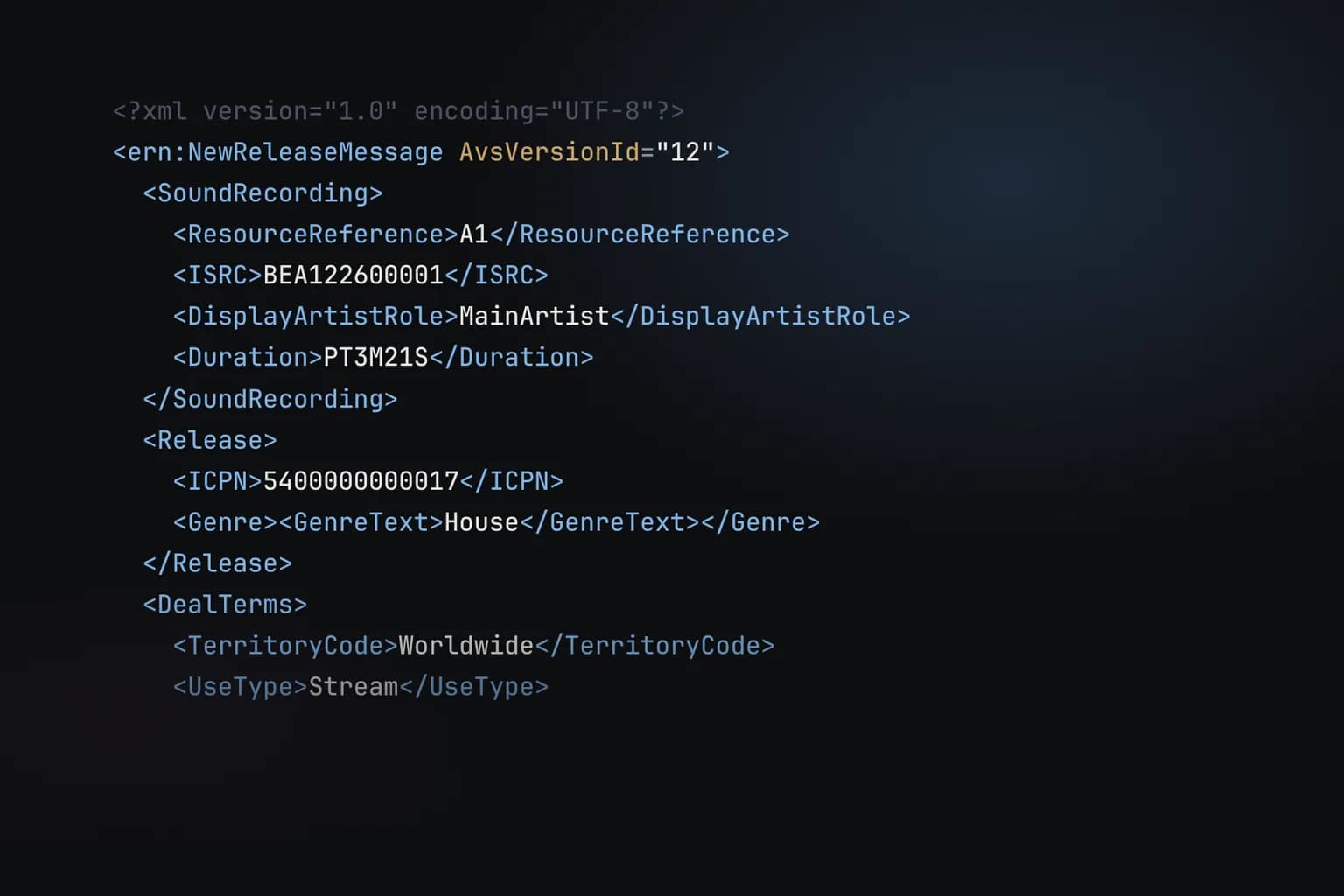
The International Standard Recording Code identifies one specific recording. It is 12 characters: a country code, a three character registrant code, the last two digits of the year it was assigned, and a five digit number.

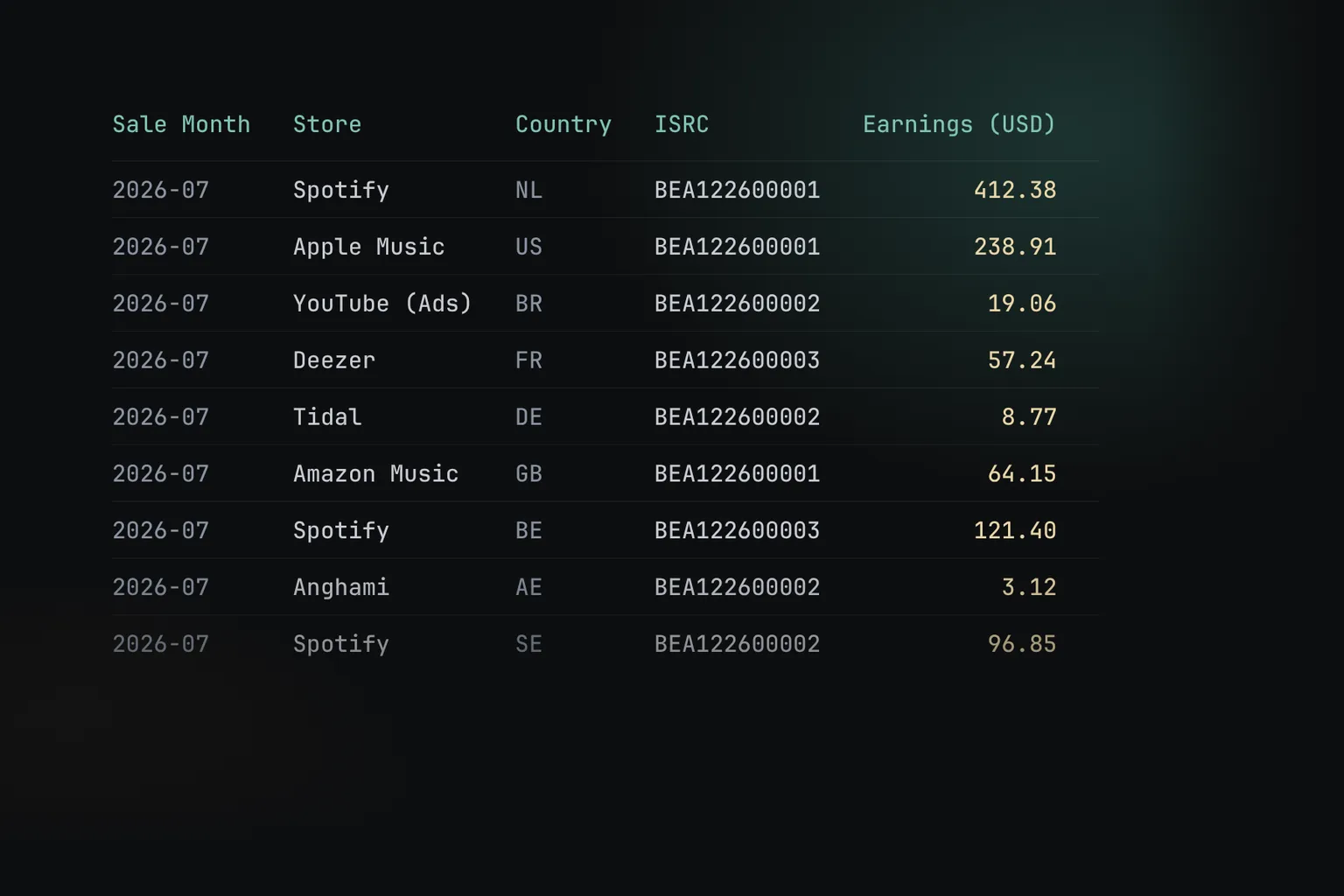
Streaming services report plays per ISRC. That is how a stream finds its way back to the right master owner.
The rules that matter:
- Every different recording gets its own ISRC. A radio edit, an extended mix, a remix, a live version, an acoustic take, a remaster that sounds different: each one is new.
- The same recording keeps its ISRC everywhere. The single and the album track are one ISRC when the audio is identical. Do not let a distributor mint a second code for it, or its plays split across two IDs.
- ISRCs are free from national agencies. Most distributors assign one automatically when you upload. Write it down either way: you will need it for sync, neighbouring rights and playlist pitching.
ISWC: the song
The International Standard Musical Work Code identifies the composition: the melody and the lyrics, no matter who records them. It starts with a T followed by ten digits.

You do not apply for an ISWC directly. Your collecting society requests it when you register the song with the writers and their shares.
- One song has one ISWC. Your demo, your album version and a stranger's cover all share it.
- The ISWC links recordings to writers. When a society matches an ISRC to an ISWC, performance and mechanical money can reach the people who wrote the song.
- No ISWC usually means the song was never registered. If your society cannot show one, the money for that song has nowhere to go.
IPI: the person or company
The Interested Party Information number identifies a rights holder: a songwriter, a composer, a lyricist or a publisher. It is 9 to 11 digits. Older contracts may call it a CAE number, which is the name it had before.
Your society gives you an IPI when you join as a writer. It stays with you for life and follows you if you ever switch society.
- Every writer on a registration needs one. A split with a co-writer who has no IPI is a split the society cannot pay.
- A publisher has its own IPI. If you set up a publishing name, it gets a separate number from your writer IPI.
- Your IPI is not secret. Share it with co-writers and put it on every split sheet.
UPC and EAN: the release
The Universal Product Code (12 digits) and the European Article Number (13 digits) are barcodes for a product. In music, the product is the release: a single, an EP, an album.
- Each release gets its own UPC. A single and the album it later appears on have different UPCs, even when the track and its ISRC are the same.
- Distributors assign them for free on most plans. Labels that sell physical copies often buy their own range from GS1.
Where the money gets lost
Most missing royalties trace back to one of these:
- Reused ISRCs. Two versions on one code, so plays land on whichever version a platform matched first.
- Duplicate ISRCs. One recording on two codes, so its history and chart data split in two.
- Unregistered songs. Recordings with an ISRC but no ISWC behind them. Performance and mechanical royalties go to a pool of unmatched money.
- Writers without an IPI. A co-writer who never joined a society cannot be paid, and their share can hold up the whole registration.
Build your code sheet

Take your last release and fill in one row per track:
| Track | Version | ISRC | ISWC | Writers and IPIs | Shares | UPC |
|---|
Every empty cell is a job. An empty ISWC means a song to register. An empty IPI means a co-writer to chase.
What Aden is for
Aden keeps these codes on the track they belong to: the ISRC on each version, the ISWC and the writers with their IPIs and shares on the song, the UPC on the release. Our free split sheet generator records writers, shares, PROs and IPIs in a PDF your co-writers can sign.
Aden does not issue codes and does not collect royalties. It keeps the facts in one place so your distributor and your society get the same answer every time.
FAQ
What is the difference between an ISRC and an ISWC?
An ISRC identifies one recording. An ISWC identifies the song that recording is made from. One song can have many ISRCs (a demo, a remix, a live version, a cover) but only one ISWC.
Do I need a new ISRC for a remix or a remaster?
Yes, when the audio is different. Remixes, edits, live takes and remasters that sound different each need their own ISRC. The exact same audio on a single and an album keeps one ISRC.
How do I get an IPI number?
Join a collecting society as a writer, such as SABAM, PRS, ASCAP, BMI, SACEM or GEMA. The society issues your IPI when your membership is accepted.
Is a CAE number the same as an IPI number?
Yes. CAE is the older name. The IPI system replaced it, and older paperwork may still say CAE.
Does a single need a different UPC from the album?
Yes. A UPC identifies a release, so each single, EP and album gets its own. The tracks inside keep their ISRCs across releases.
Does Aden assign ISRCs or collect royalties?
No. Your distributor or a national agency assigns ISRCs, your collecting society assigns ISWCs and IPIs, and royalties are paid by them. Aden keeps the codes, splits and versions together on each track.
Less admin. More music.